

 Tiếng Việt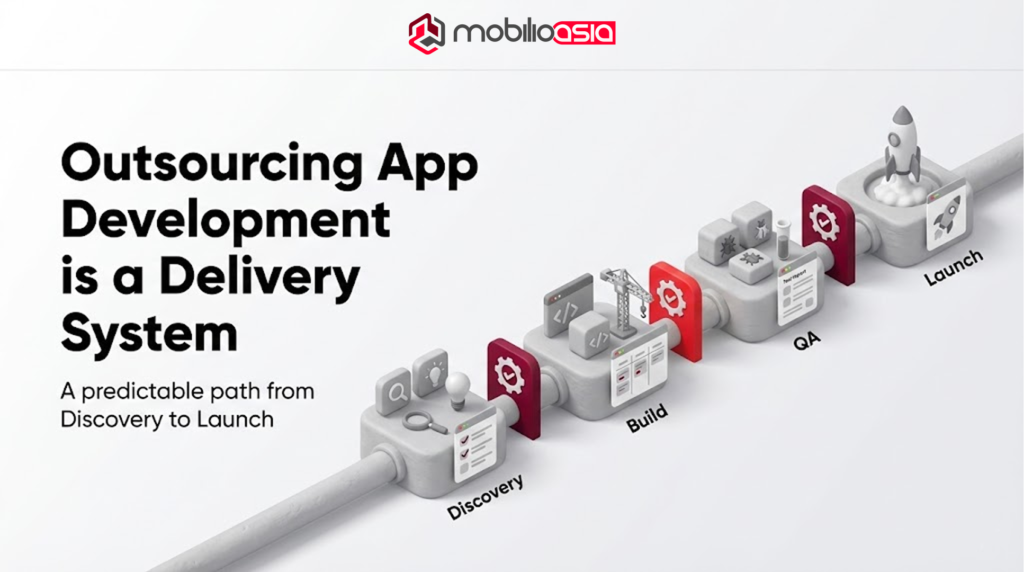
Outsourcing app development is not just hiring a team. It is a delivery system. When you manage it with clear phases, clear owners, and quality gates, you get speed without chaos.
This guide is written for CEOs and Founders who need a predictable path from idea to launch. You will get a practical step by step process from Discovery to Build to QA to Launch, plus a deliverables checklist and risk controls you can apply immediately.
If your product is mobile led, treat mobile as a core channel from day one. This impacts UX, performance, and release readiness. Read more: Mobile-First: The Strategic Imperative for Digital Products in a Mobile-Driven Market.
Table of contents
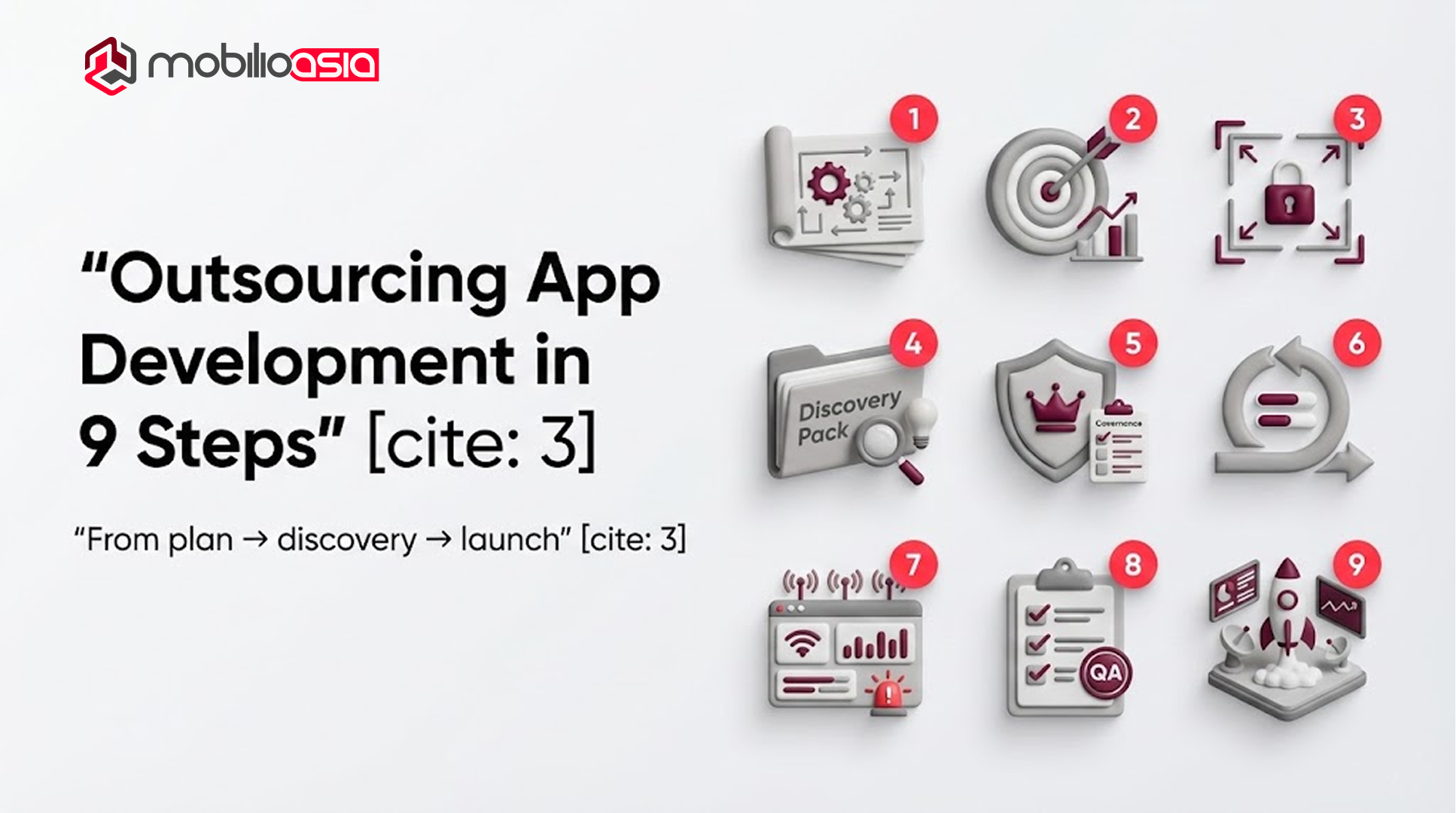
Quick answer: outsourcing app development in 9 steps
If you need a fast overview, here is the core outsourcing app development process.
-
Define outcomes, users, constraints
-
Set MVP boundaries and change control
-
Run discovery and approve a Discovery Pack
-
Set delivery governance before coding
-
Build in sprints with demo based acceptance
-
Track CEO friendly signals, not vanity progress
-
Test in layers and define QA gates
-
Approve a release candidate with hard criteria
-
Launch with monitoring and hypercare
You will find each step explained below, with deliverables and risk controls.
Why outsourcing app development works and when it fails
Outsourcing app development works when you are buying an execution system, not just capacity.
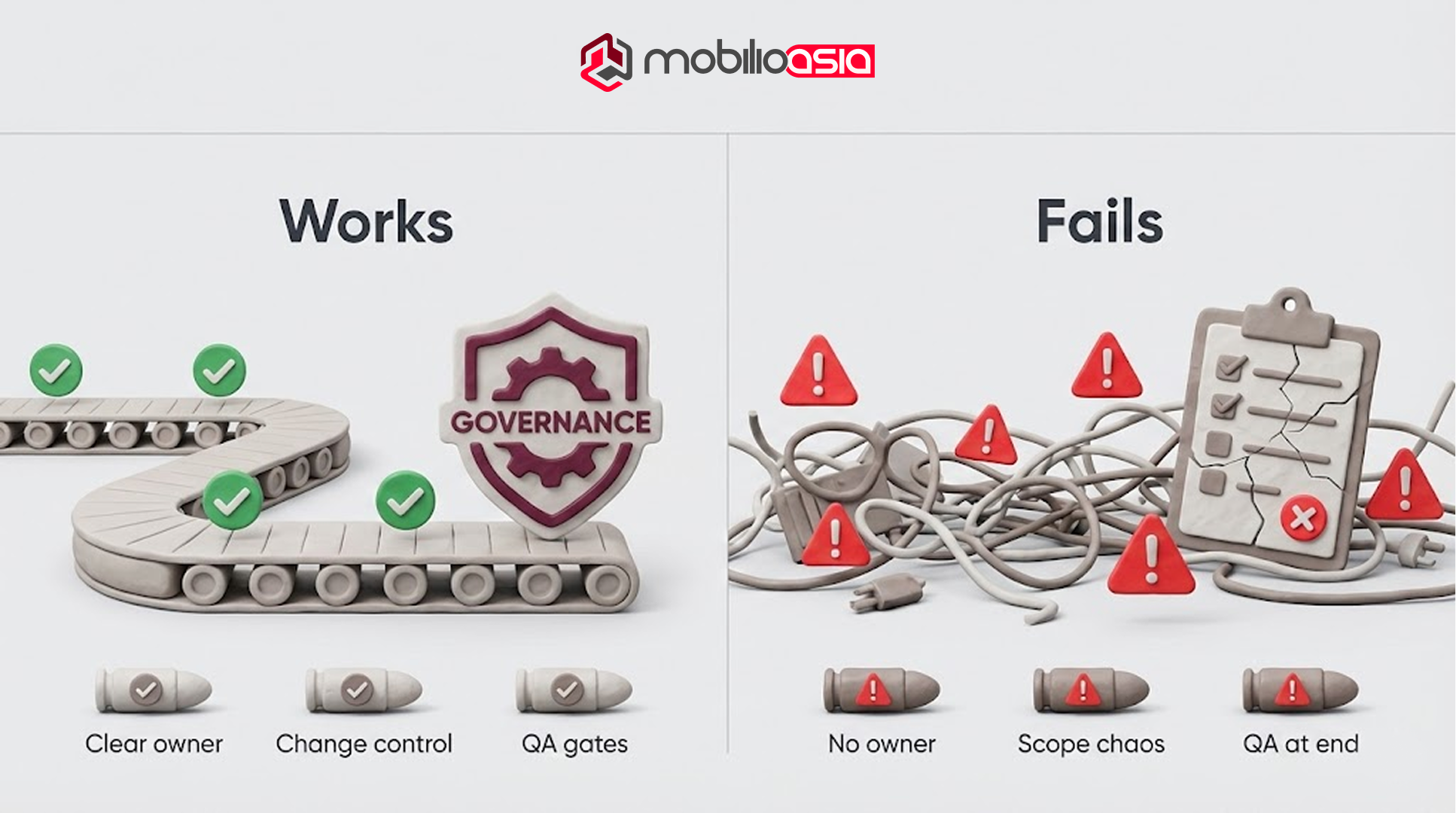
It works when you need one or more of these outcomes
-
Ship faster than hiring allows
-
Add specialist skills like mobile, backend, QA automation, DevOps, security
-
Establish predictable sprint outputs and a release cadence
-
Reduce delivery risk through a proven workflow and governance
It fails when these conditions are true
-
No single decision owner exists for scope and priorities
-
Requirements change constantly but there is no change control
-
The vendor cannot show real discovery outputs, only proposals and estimates
-
QA is treated as a final week activity instead of a continuous gate
If you are still deciding buy vs build, settle that early. If off the shelf tools are not enough, you need a custom roadmap and integration plan. Related reading: What Is Custom Software Development? When Off-the-Shelf Fails.
Phase 1 Discovery for outsourcing app development
Discovery is where outsourcing becomes predictable. It converts ambiguity into deliverables you can approve.
Step 1: Define outcomes and constraints
Start with outcomes, not features.
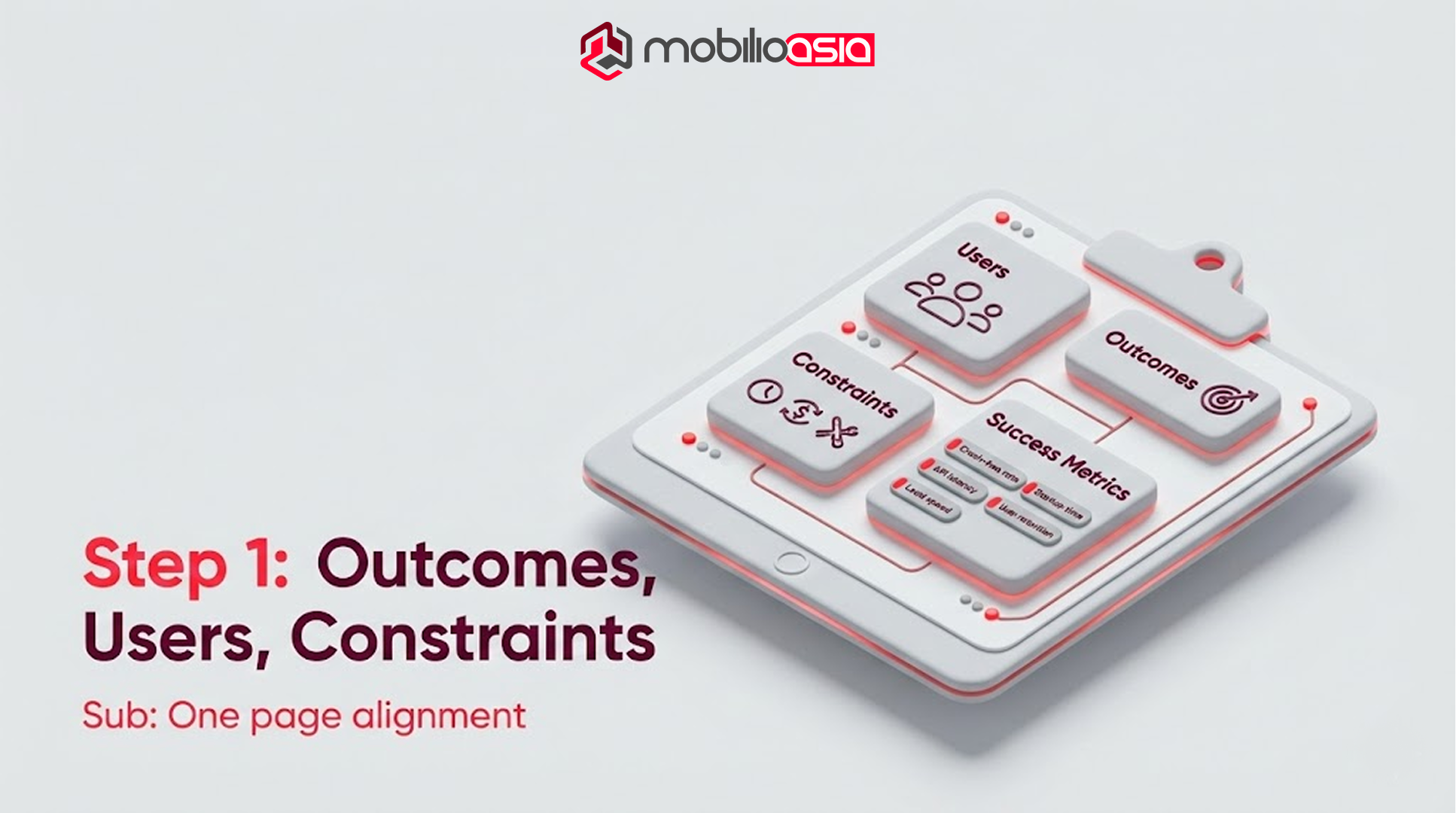
A good outsourcing app development kickoff includes:
-
Target users and top use cases
-
Business goal: MVP validation, revenue, retention, ops efficiency
-
Constraints: timeline, budget range, platforms, integrations, compliance
-
Success metrics: activation, conversion, crash free rate, startup time, API latency
Keep this simple. One page is enough. The point is alignment.
Step 2: Set MVP boundaries and change control
Most scope conflicts come from unclear boundaries.
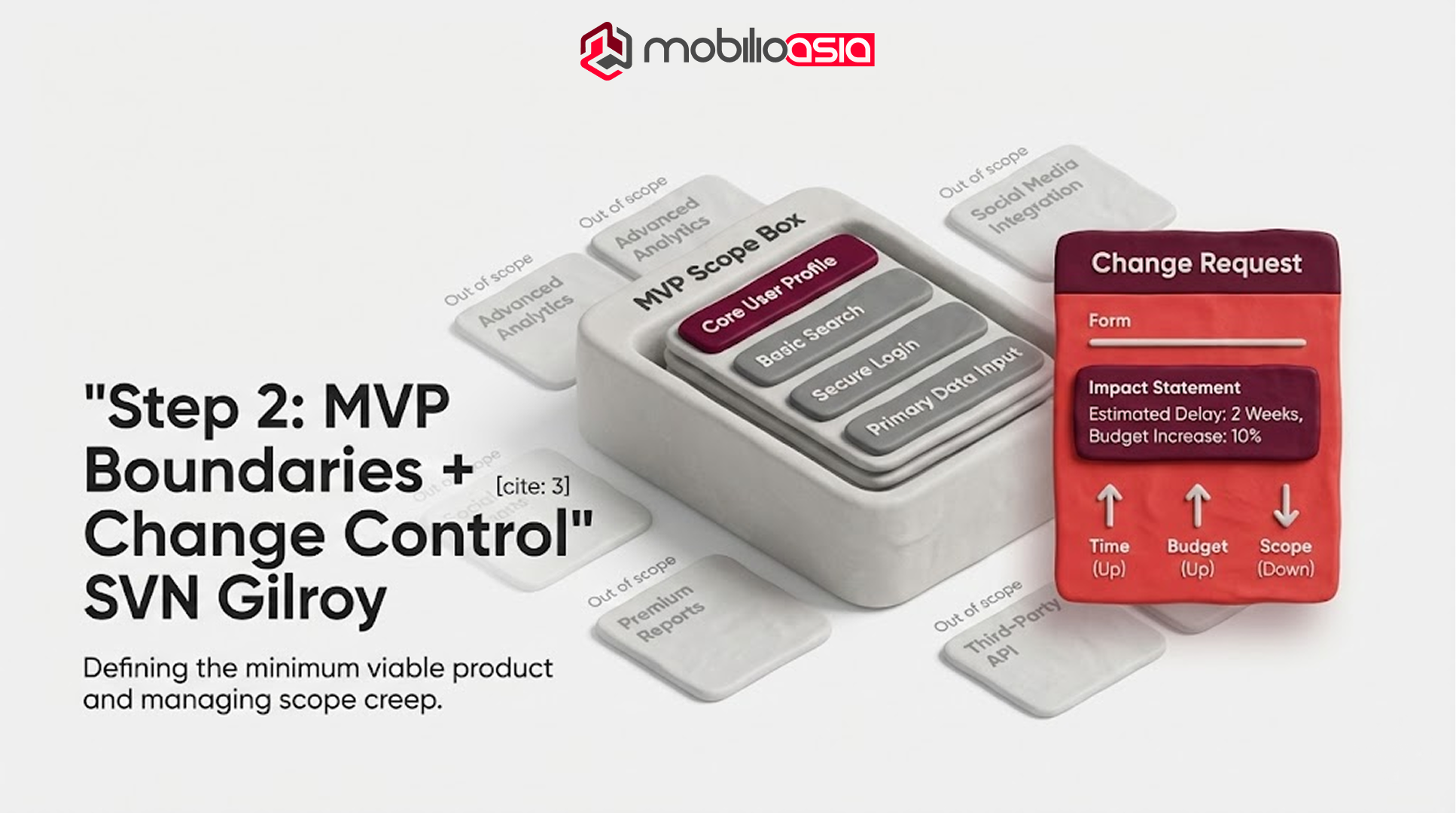
Define:
-
What is in MVP
-
What is explicitly out of scope
-
What changes look like: trade off, timeline change, or budget change
-
Who approves changes and how fast decisions must be made
A practical rule: every change must come with an impact statement. No impact statement, no change.
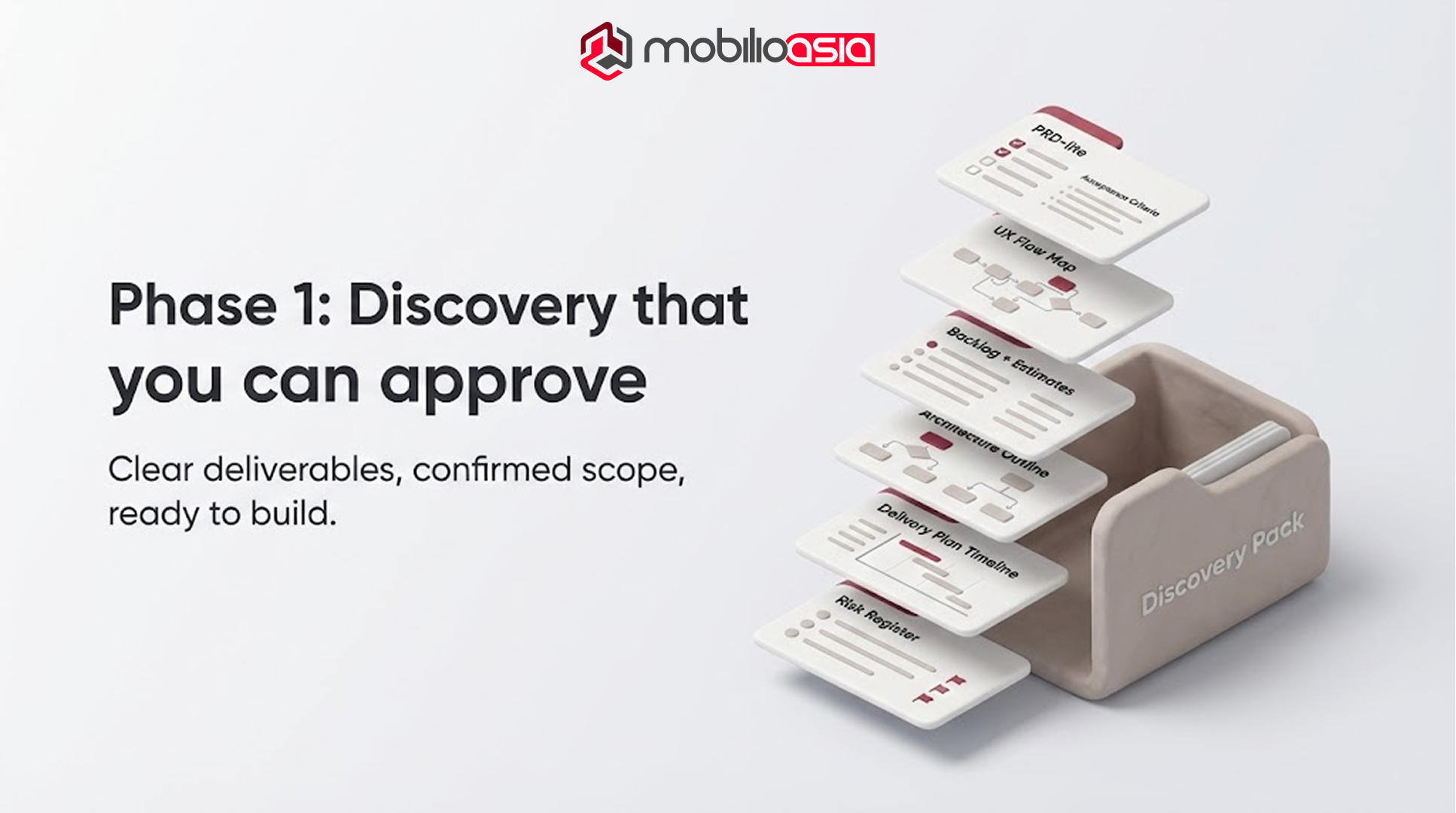
Step 3: Produce a Discovery Pack you can approve
In outsourcing app development, discovery is not a meeting. It is an output.
Minimum Discovery Pack deliverables:
-
PRD lite with acceptance criteria per feature
-
UX flows or wireframes, enough to build without guessing
-
Prioritized backlog with estimates and dependencies
-
Architecture outline and integration plan
-
Delivery plan with milestones, QA gates, release approach
-
Risk register with top risks and mitigations
If you plan to compete on analytics, define event tracking early. Retrofitting analytics after launch is expensive and creates data trust issues. Read more: AI-powered Analytics: The Strategic Lever in an Uncertain Market.
Phase 2 Build in sprints
This phase is where you get speed, but only if you set governance first.
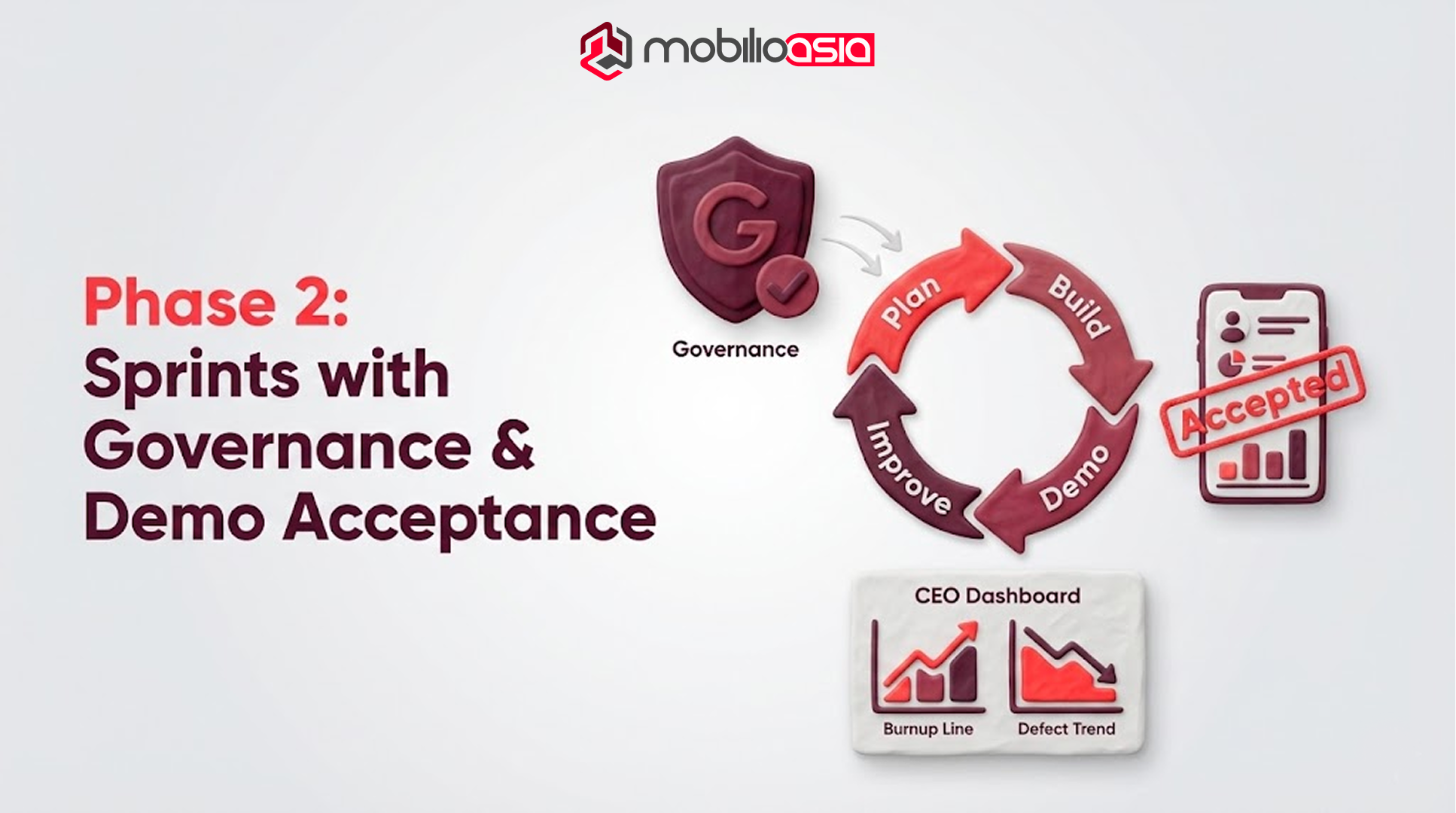
Step 4: Set governance before coding
Before sprint one, confirm these basics.
Product governance
-
Single source of truth: backlog, decisions log, priorities
-
Definition of Done and acceptance criteria rules
-
Release rhythm: how often you ship and how you approve a release candidate
Engineering governance
-
Repo and access: who owns what, how access is controlled
-
Branching and code review process
-
CI expectations: build, tests, release artifacts
-
Environments: dev, staging, production and who can deploy
Communication governance
-
Cadence: planning, daily updates, review demo, retro, steering check in
-
Escalation path: what happens when deadlines slip or blockers appear
-
Reporting format: progress, risks, next deliverables
If you want a practical reference for sprint cadence and how teams typically structure it, Atlassian’s overview is a solid baseline: Sprint cadence guide.
Step 5: Build in sprints with demo based acceptance
In outsourcing app development, demos reduce risk because they force clarity.
A reliable sprint rhythm:
-
Sprint planning: commit to scope you can deliver
-
Daily async update: written, short, with blockers
-
Sprint review demo: show completed work and gather feedback
-
Retrospective: improve delivery process
Sprint reviews matter because they create transparency and stakeholder alignment. Atlassian provides a clear explanation of sprint reviews and their purpose: Sprint reviews.
CEO tip: accept work only when it matches acceptance criteria. Avoid percent complete updates.
Step 6: Rrack CEO friendly signals, not vanity metrics
Ask for signals that predict launch success.
-
Burnup against MVP scope baseline
-
Defects by severity and trend
-
QA gate status for release candidate
-
Risks register updated weekly
-
Dependencies list: integrations, app store assets, legal, data
If your product is AI driven, positioning affects what you build and what you measure. Many teams make the mistake of pushing AI products with FMCG style tactics that do not match buying behavior for tech. Related reading: Marketing AI Products: Why FMCG Thinking Is Holding Tech Companies Back.
Phase 3 QA and hardening
Most launch issues are not missing features. They come from weak QA gates.
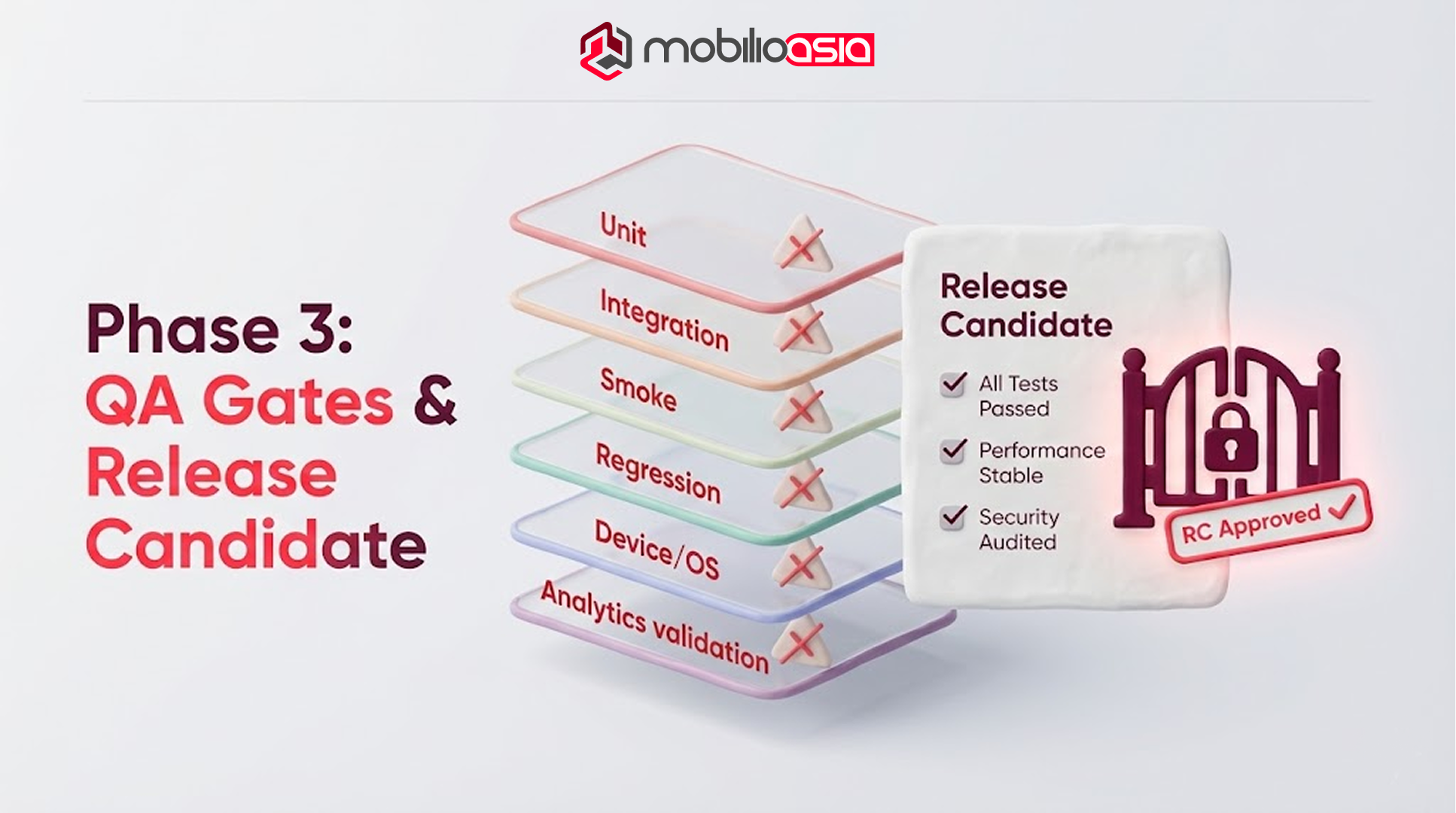
Step 7: Test in layers, not only at the end
A practical testing stack for outsourcing app development:
-
Unit tests for core logic
-
Integration tests for APIs and critical workflows
-
Smoke tests for each build
-
Regression tests for each release candidate
-
Device and OS coverage for mobile
-
Analytics validation: events fire correctly and consistently
For mobile security baselines, a widely used reference is OWASP MASVS.
For broader secure software development practices across the lifecycle, see NIST SSDF.
Step 8: Approve a release candidate with clear gates
Define gates that must be true to ship. Keep them measurable.
Release candidate gates checklist:
-
No critical issues open
-
Performance budget met
-
Security baseline checks completed
-
Crash and ANR risk reviewed
-
Store submission assets ready
-
Monitoring plan ready
For Android, Android vitals explains how Play tracks app quality metrics like stability and performance, and how you can use that data in Play Console: Android vitals.
Phase 4 Launch and hypercare
Launch is a controlled rollout plus monitoring, not a single moment.
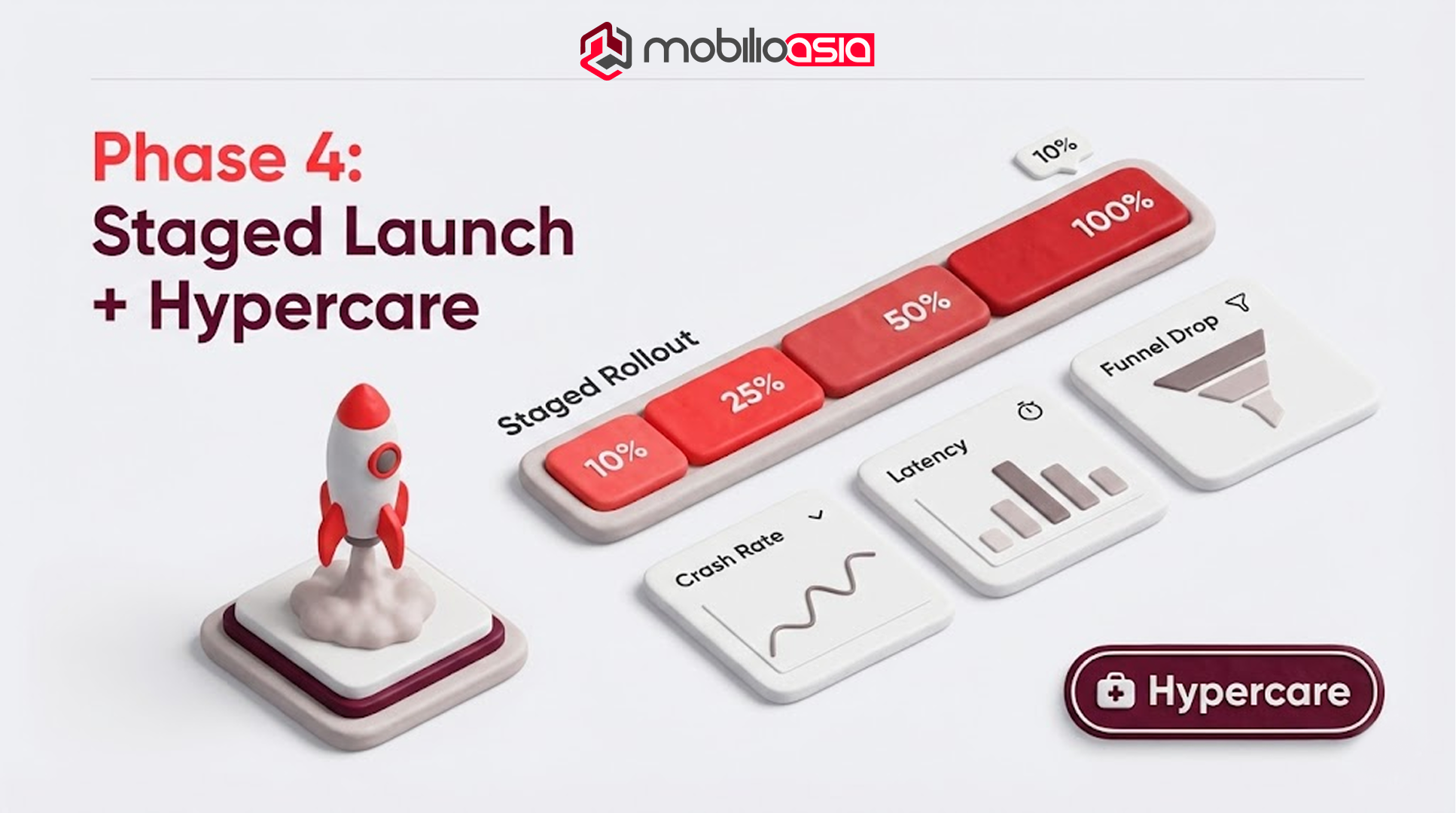
Step 9: Launch with staged rollout and hypercare
For Android updates, staged rollouts let you release to a percentage of users, then increase gradually. Google states staged rollouts apply to updates, not first time publishing: Staged rollouts in Play Console.
For iOS, reduce preventable rejections by aligning with the official review criteria: Apple App Store Review Guidelines.
Hypercare should include:
-
Monitoring dashboards for crashes, latency, funnel drop offs
-
Incident triage and hotfix protocol
-
Daily check in window for the first week if usage is high
-
Post launch review: what to fix next, what to build next
Roles and cadence for outsourcing app development
Outsourcing breaks when everyone owns decisions, which means no one owns decisions.
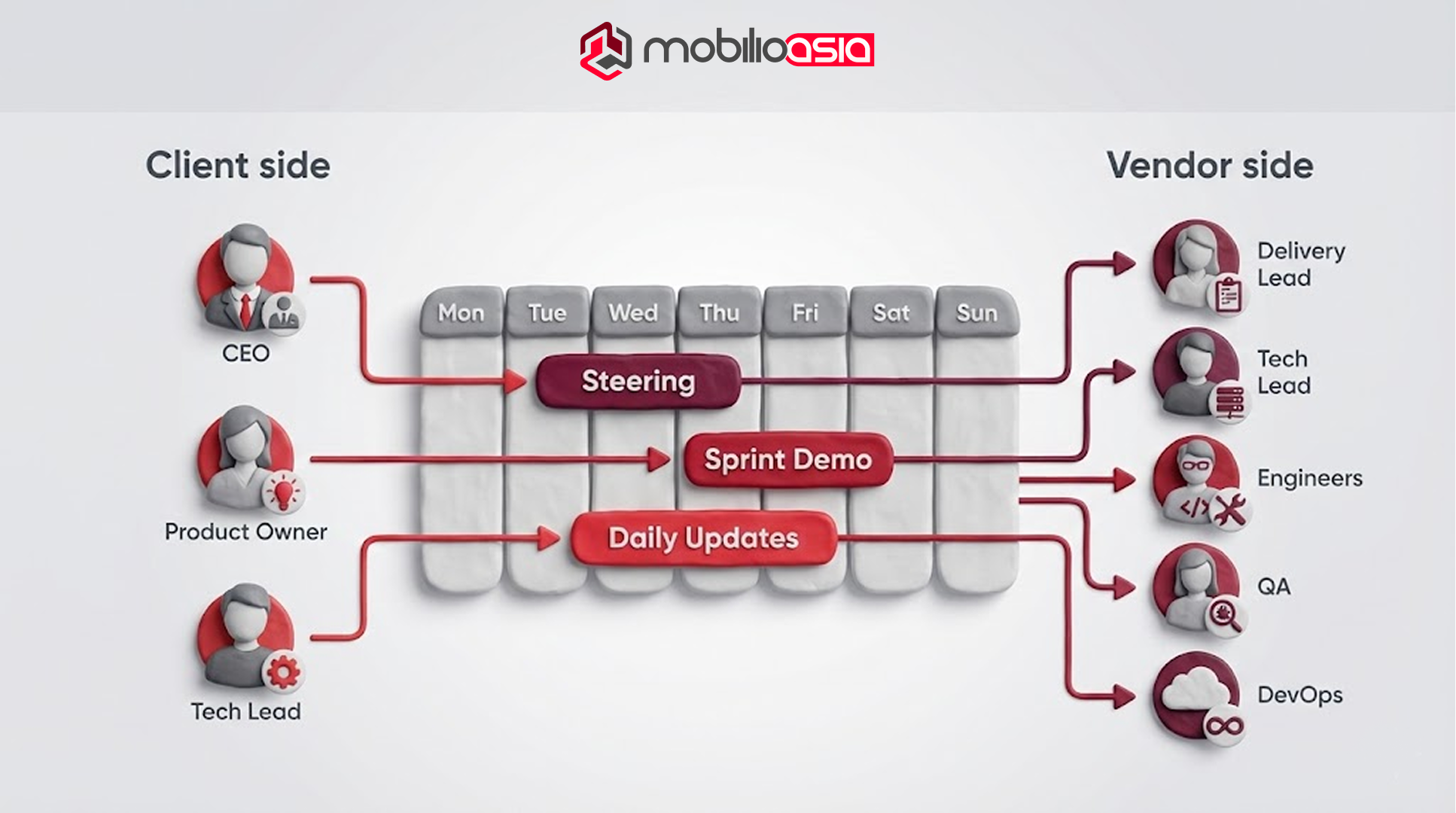
Minimal client roles
-
CEO or Founder: outcomes, budget guardrails, priority calls
-
Product Owner or PM: backlog, acceptance, day to day decisions
-
Tech lead: architecture checkpoints and quality review
Minimal vendor roles
-
Delivery lead or PM
-
Tech lead
-
Engineers: mobile, backend, web as needed
-
QA
-
DevOps: often part time
Recommended cadence
-
Weekly steering check in: goals, risks, trade offs
-
Sprint review demo: acceptance and priorities
-
Written daily updates: blockers and next steps
This cadence is the backbone of predictable outsourcing app development.
Deliverables checklist for outsourcing app development
Use this as a quality filter. If you are not getting these deliverables, you are not buying a real delivery system.
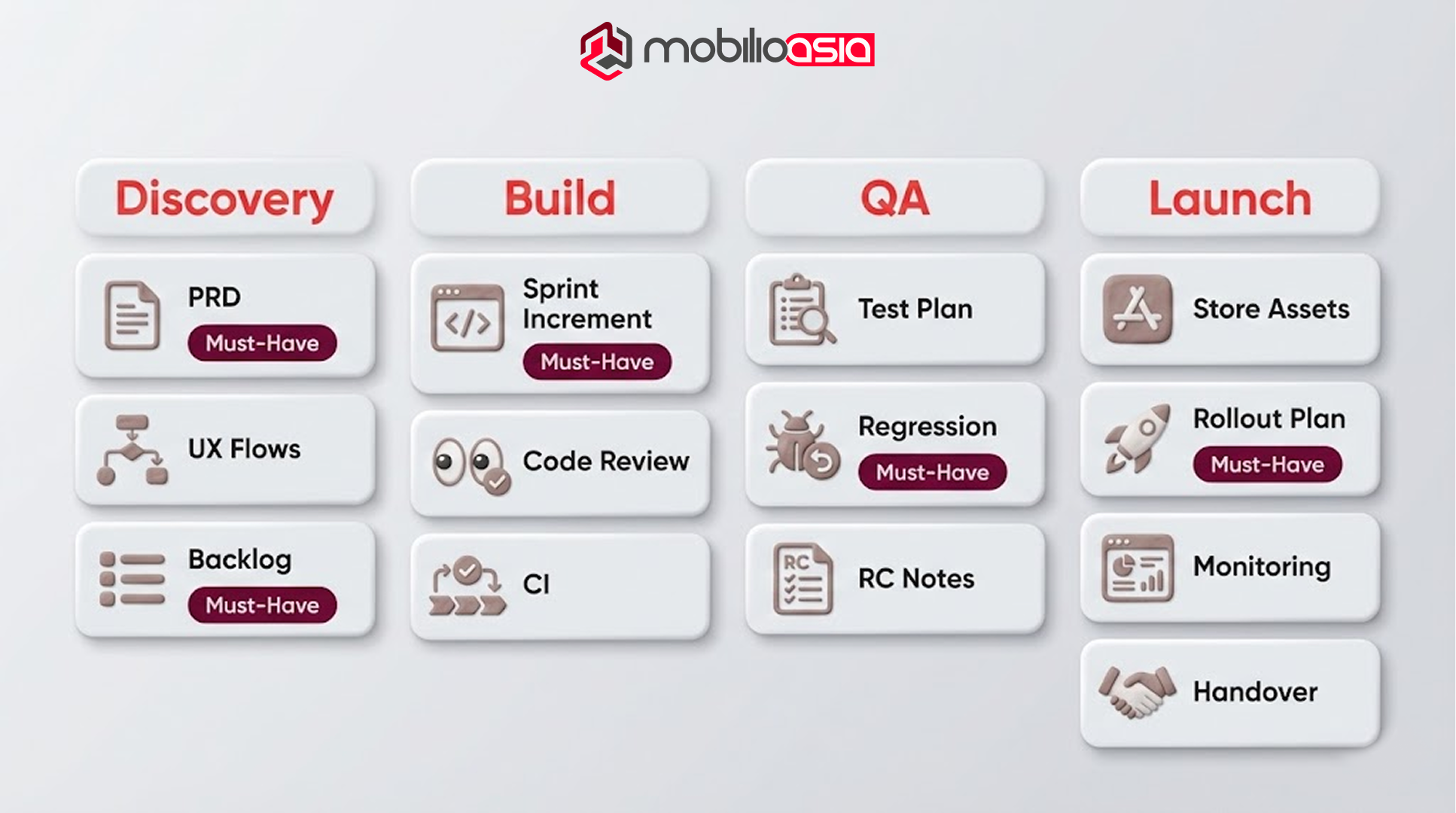
| Phase | Must have deliverables | What you should be able to do |
|---|---|---|
| Discovery | PRD lite, UX flows, backlog with estimates, architecture outline, delivery plan, risk register | Approve MVP scope, timeline, and risks |
| Build | Working increments each sprint, code reviews, CI builds, sprint demos, updated backlog | Verify progress by demo and acceptance criteria |
| QA | Test plan, regression results, defect triage rules, release candidate notes, performance checks | Know if you are ready to ship |
| Launch | Store assets, rollout plan, monitoring plan, hypercare plan, handover checklist | Launch with control and stabilize quickly |
Risk controls: scope, IP, security, and release
If you only implement four controls, implement these. They reduce the most common failure modes.
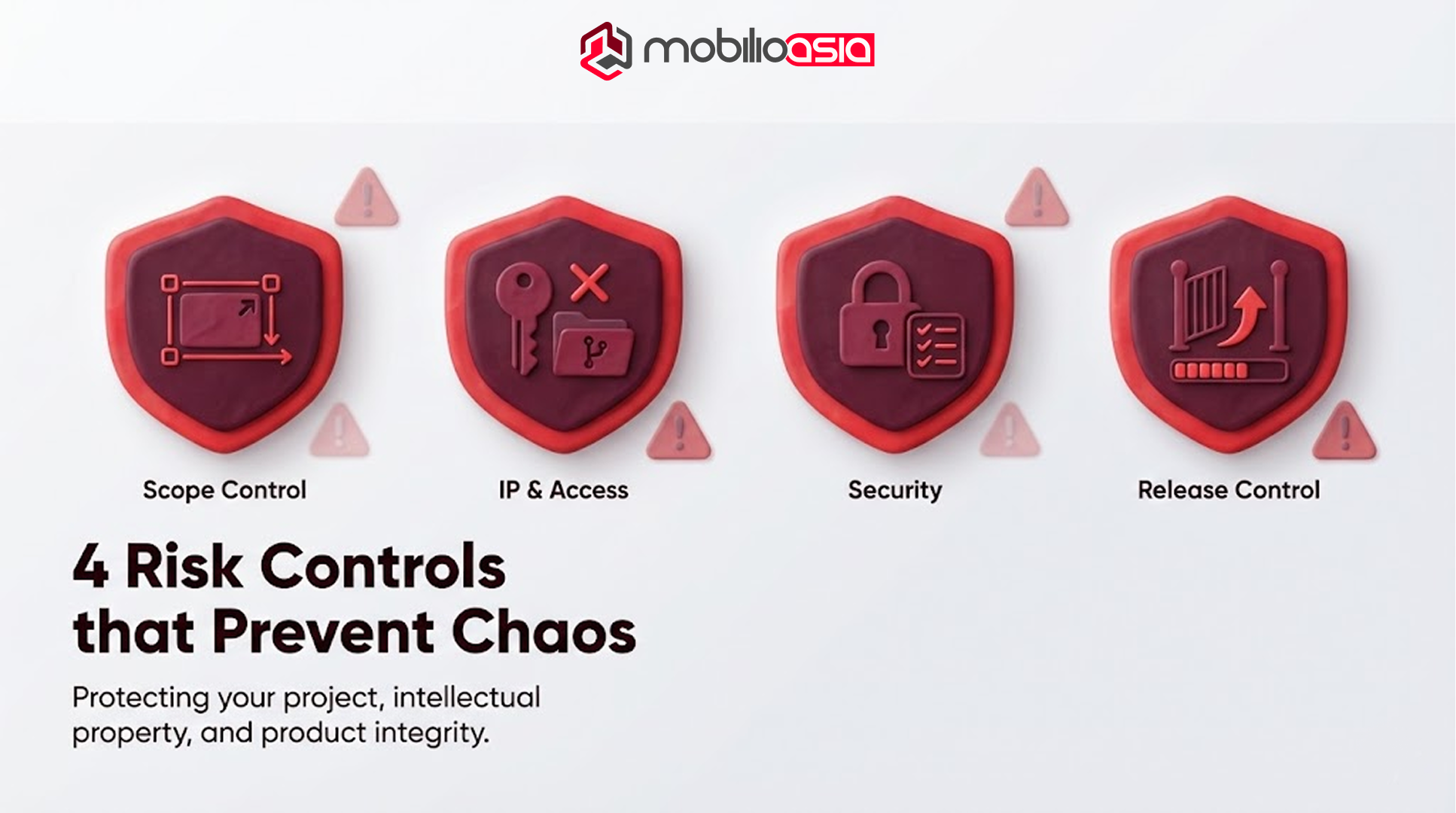
Scope control
-
Baseline MVP scope
-
Change request process with impact statement
-
Trade off rule for new scope
IP and access control
-
Client owns key accounts: repos, cloud, analytics, store consoles
-
Access is role based and auditable
-
Handover is a deliverable in the plan, not a promise
Security control
-
Mobile baseline reference: OWASP MASVS
-
Lifecycle baseline reference: NIST SSDF
Release control
-
Release candidate gates
-
Staged rollout for Android updates: Google Play staged rollouts
-
Monitor stability and performance with Android vitals
If you want a predictable outsourcing app development plan with clear risk controls
Contact Us
Vendor evaluation scorecard
Portfolio is not enough. You need to evaluate delivery maturity.
Use this scorecard during vendor selection for outsourcing app development.
| Category | What good looks like | Red flag |
|---|---|---|
| Discovery | Clear Discovery Pack deliverables, backlog quality, acceptance criteria | Vague scope, early fixed quote with no detail |
| Governance | Weekly reporting, risks register, decision log | No structured reporting |
| QA | Layered testing, defined QA gates, RC process | QA is a final week activity |
| Security | Baseline references like MASVS or SSDF aligned practices | Security is only a line item |
| Release | Staged rollout approach, monitoring plan, hypercare | No monitoring or rollback plan |
| Communication | Clear cadence and escalation path | Everything handled ad hoc |
If you are considering Vietnam delivery, evaluate execution maturity, governance, and communication model, not just rates. Related reading: Why Vietnam Is Becoming Asia’s Fastest-Growing Software Outsourcing Hub in 2026.

FAQ
How long should discovery take in outsourcing app development
For an MVP, discovery often takes one to two weeks, depending on stakeholder availability and integration complexity.
Fixed price or time and materials
If scope is evolving, time and materials with strict scope control is often safer. Fixed price works best when scope is stable and acceptance criteria are measurable.
How do we reduce communication risk
Define decision owners, enforce written updates, run sprint demos, and keep a weekly steering check in.
Who owns the code and accounts
Best practice is client ownership for repos, cloud, analytics, and store consoles. Make this explicit in the contract and in the handover checklist.
If you want a delivery plan you can run as a CEO, start with discovery, deliverables, and QA gates. This is how outsourcing app development becomes predictable.
